Stretching Exercises for Flexibility Over 50 Part 3
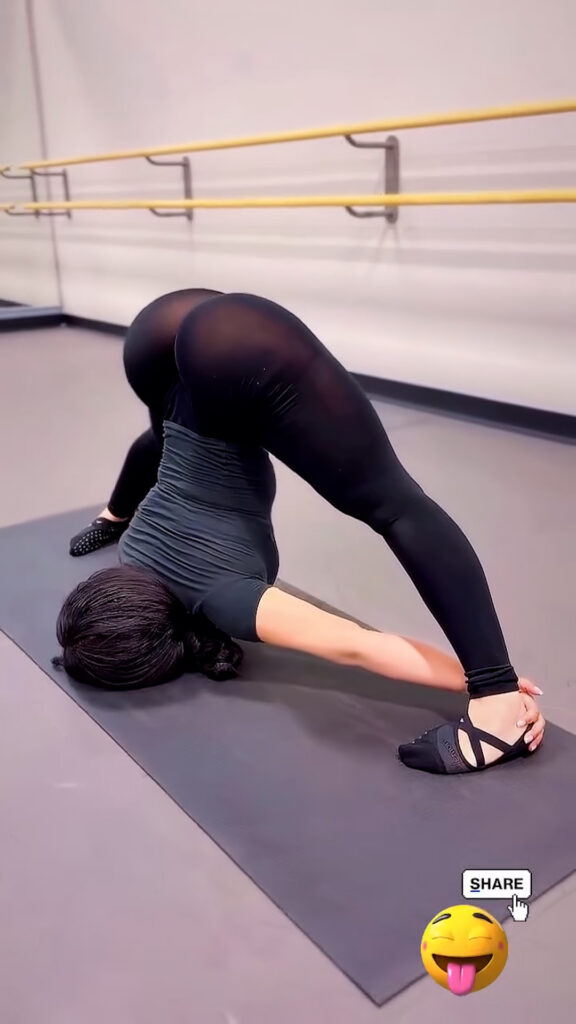


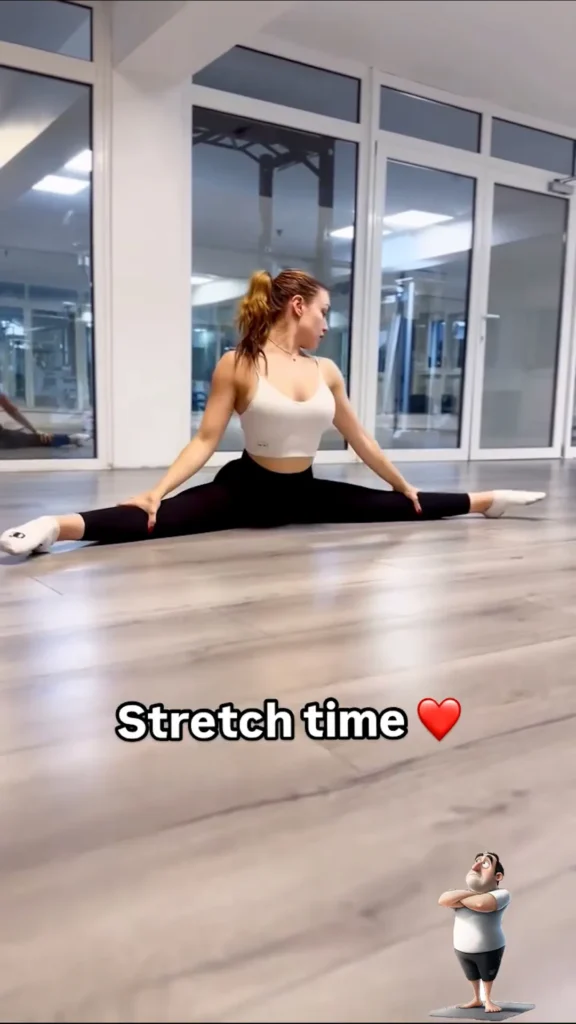

Pose: Wide-Legged Forward Fold Inversion Stretch (Prasarita Padottanasana Variation)
Key Benefits:
• Deep Hamstring & Inner Thigh Stretch: Deeply elongates the hamstrings and adductors across both legs.
• Spinal Decompression & Upper Back Opening: Relieves tension along the spine and gently stretches the shoulders and upper back.
• Enhanced Circulation & Balance: Improves blood flow to the upper body and head while challenging core stability.
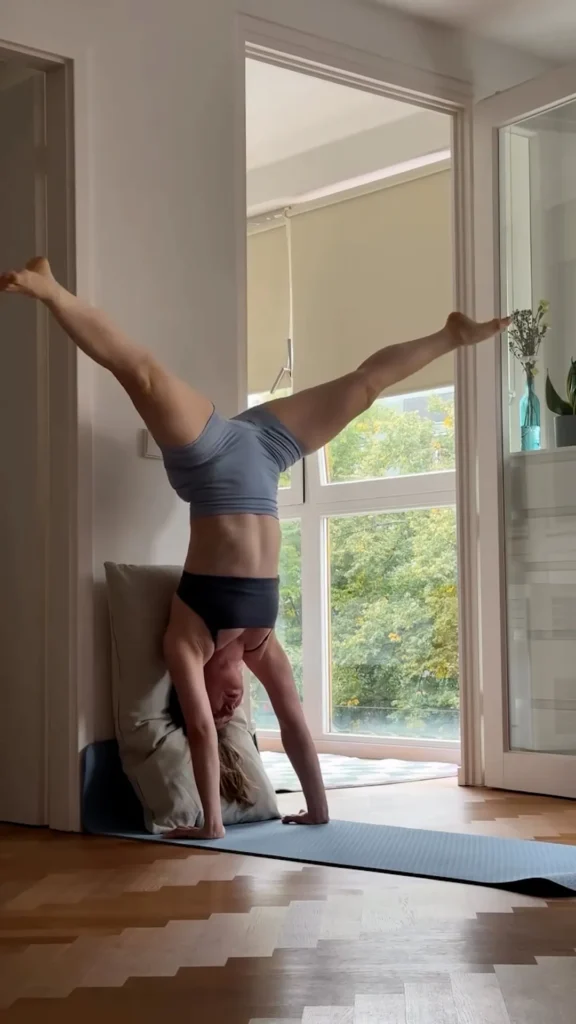
Pose: Wall-Supported Handstand Straddle Split (Adho Mukha Vrksasana Variation)
Key Benefits:
• Shoulder & Upper Body Strength: Builds functional endurance and stability in the shoulders, arms, and wrists.
• Core Stability & Inversion Balance: Engages deep abdominal muscles to control alignment while inverted against the wall.
• Active Hip Abduction & Mobility: Opens the inner thighs and enhances hip flexibility in a straddle position.
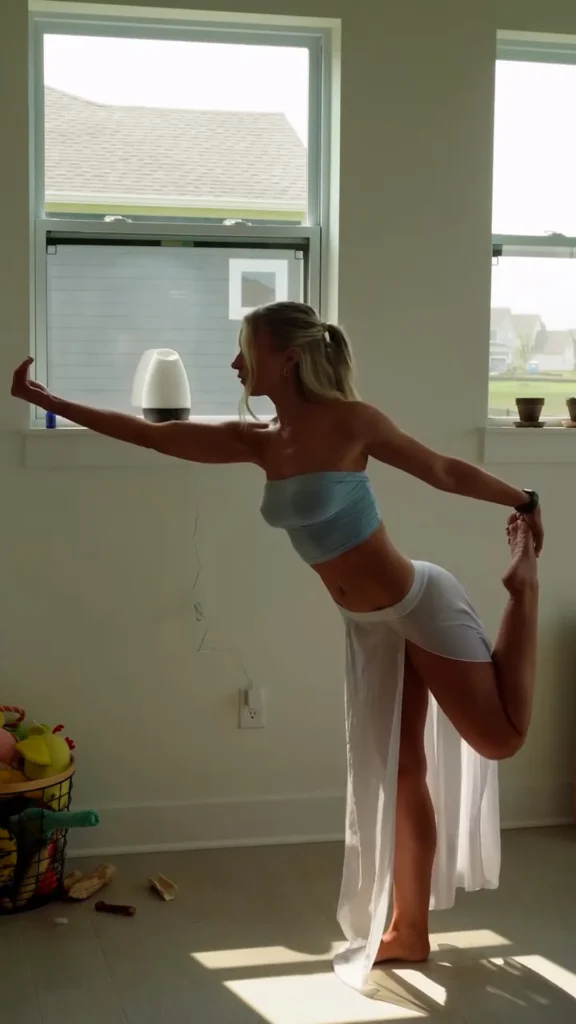
Pose: Dancer Pose (Natarajasana)
Key Benefits:
• Deep Quadricep & Hip Flexor Stretch: Opens the chest, shoulders, and hips while stretching the quadriceps of the lifted leg.
• Full-Body Balance & Ankle Stability: Builds strength in the standing leg, foot, and ankle while enhancing focus and stability.
• Spinal Flexibility & Posture Improvement: Strengthens the back muscles and promotes better posture through a controlled backbend.
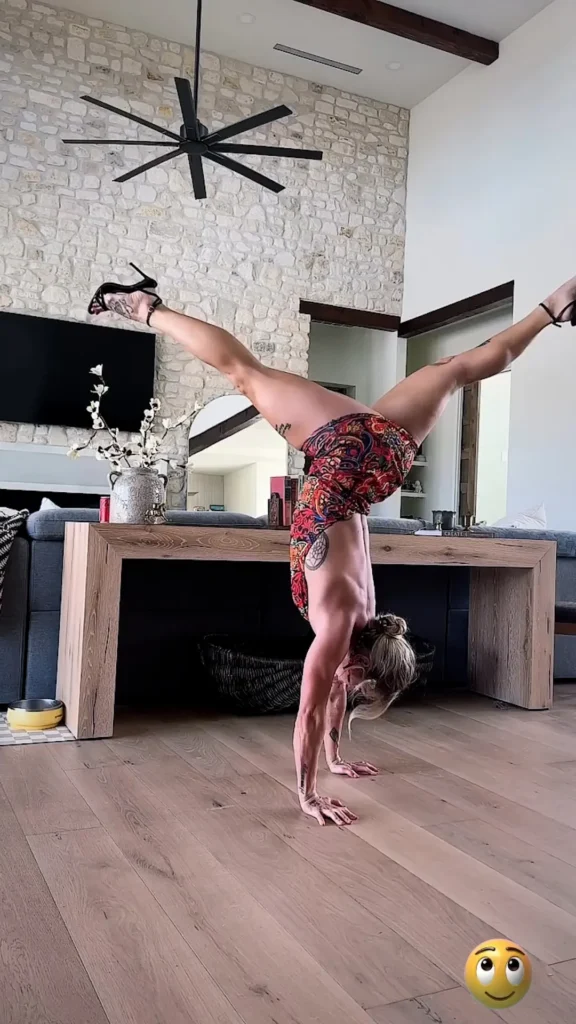
Pose: Freestanding Handstand Straddle Split (Adho Mukha Vrksasana Variation)
Key Benefits:
• Total Upper Body & Core Strength: Deeply engages the shoulders, arms, wrists, and core muscles to stabilize the full inversion.
• Hip Mobility & Inner Thigh Flexibility: Opens the adductors and improves active flexibility in the hips through a wide straddle extension.
• Balance & Spatial Awareness: Enhances balance, coordination, and mental focus while supporting body weight upside down.
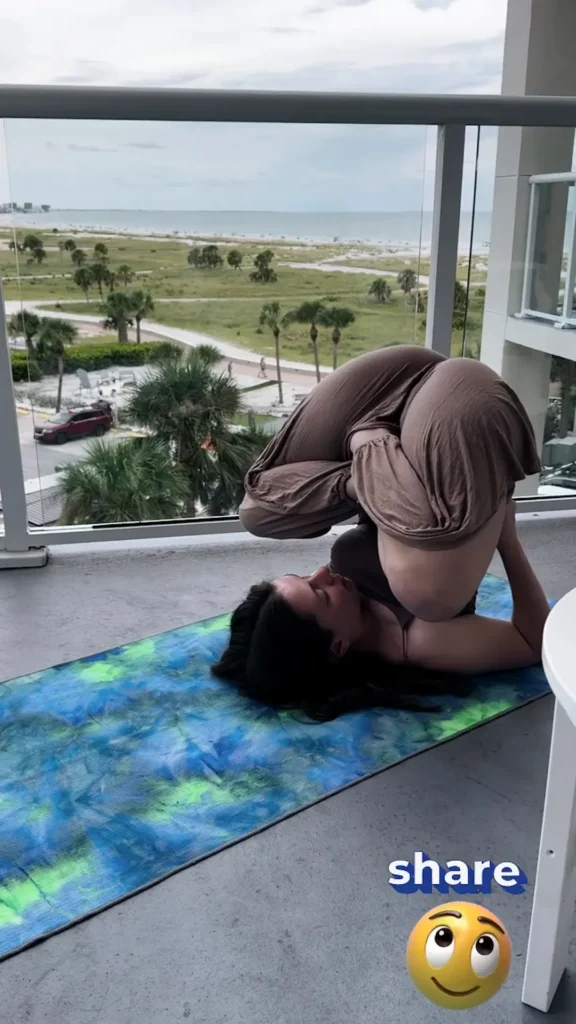
Pose: Ear-Pressure Pose / Embryo Pose in Shoulder Stand (Karnapidasana / Pindasana in Sarvangasana)
Key Benefits:
• Deep Spinal Decompression: Deeply stretches and elongates the entire spine, relieving neck and upper back tension.
• Hip & Glute Opening: Encourages deep hip flexion and stretches the gluteal muscles while folded inverted.
• Nervous System Calming: Promotes relaxation, reduces stress, and stimulates internal abdominal organs through gentle compression.
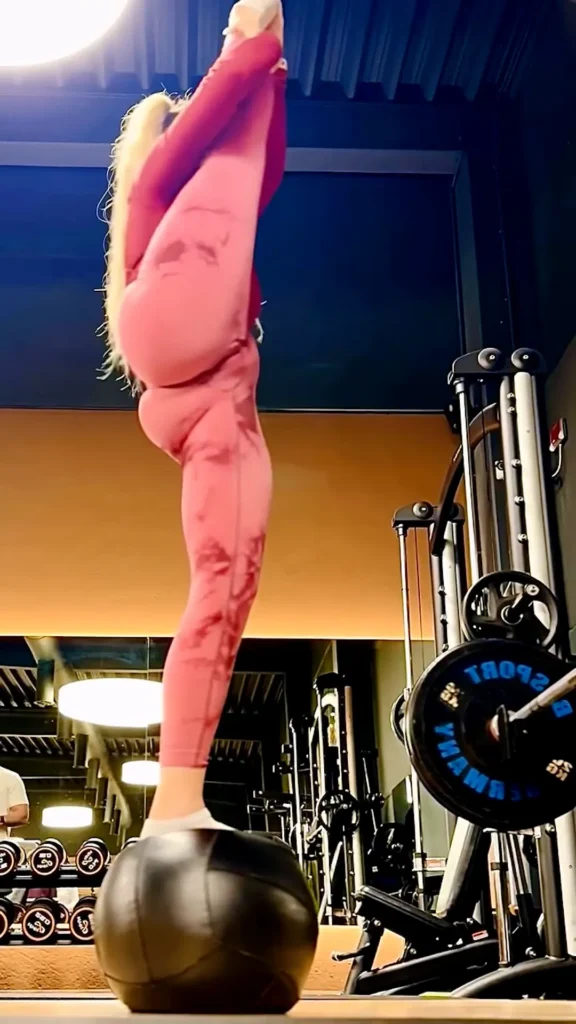
Pose: Medicine Ball Standing Split (Trivikramasana / Standing Split Variation)
Key Benefits:
• Advanced Balance & Ankle Stability: Standing on an unstable surface like a medicine ball heavily challenges foot, ankle, and core stabilizers.
• Deep Hamstring & Hip Extension: Maximizes flexibility along the hamstrings and hip flexors through a vertical leg extension.
• Total Core Engagement: Demands intense abdominal control and mental concentration to maintain upright balance safely.
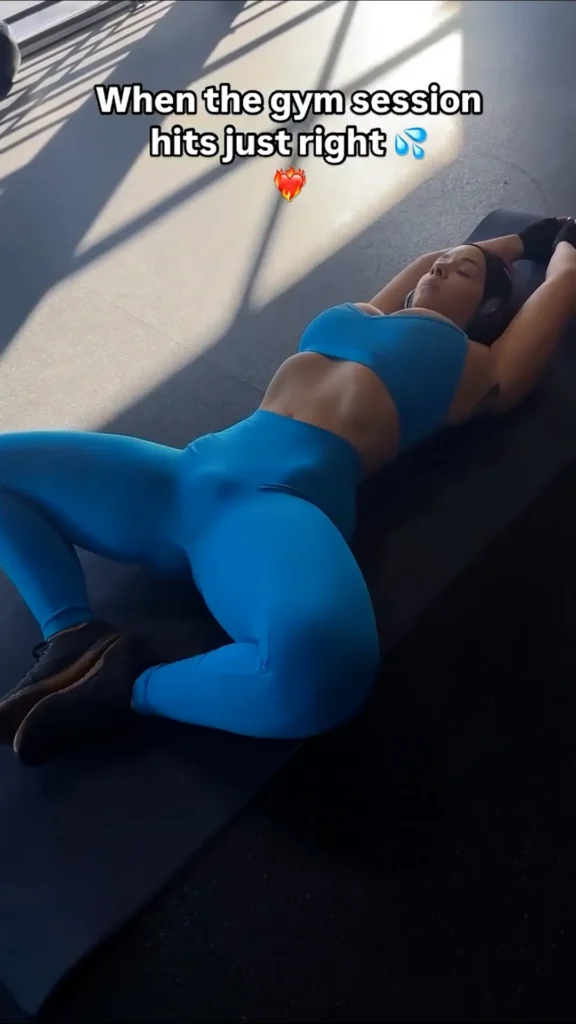
Pose: Reclined Bound Angle Pose (Supta Baddha Konasana)
Key Benefits:
• Deep Inner Thigh & Hip Opening: Gently stretches the adductors, groin, and hips without putting strain on the joints.
• Gentle Chest & Shoulder Extension: Extending the arms overhead opens the thoracic spine, chest, and shoulders for improved posture.
• Nervous System Relaxation & Recovery: Promotes muscle recovery, aids in deep breathing, and reduces post-workout tension.
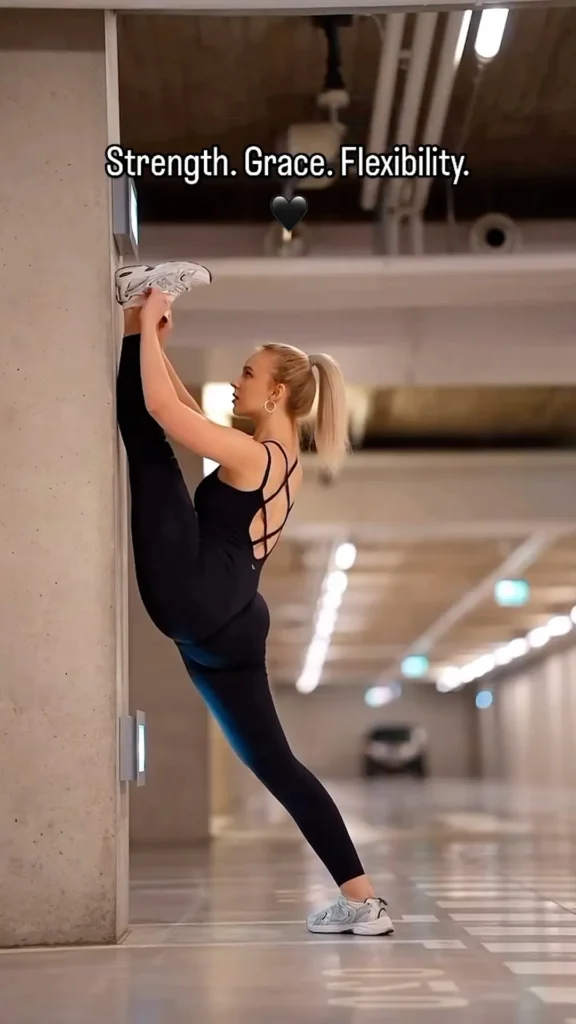
Pose: Wall-Supported Standing Split (Trivikramasana / Standing Split Variation)
Key Benefits:
• Deep Hamstring & Hip Mobility: Deeply stretches the hamstrings and expands hip flexor range of motion on the raised leg.
• Standing Balance & Ankle Stability: Strengthens the standing leg, ankle, and foot muscles while utilizing the wall for balance control.
• Core Activation & Posture Support: Requires active core engagement and back extension to maintain an upright, stable posture.
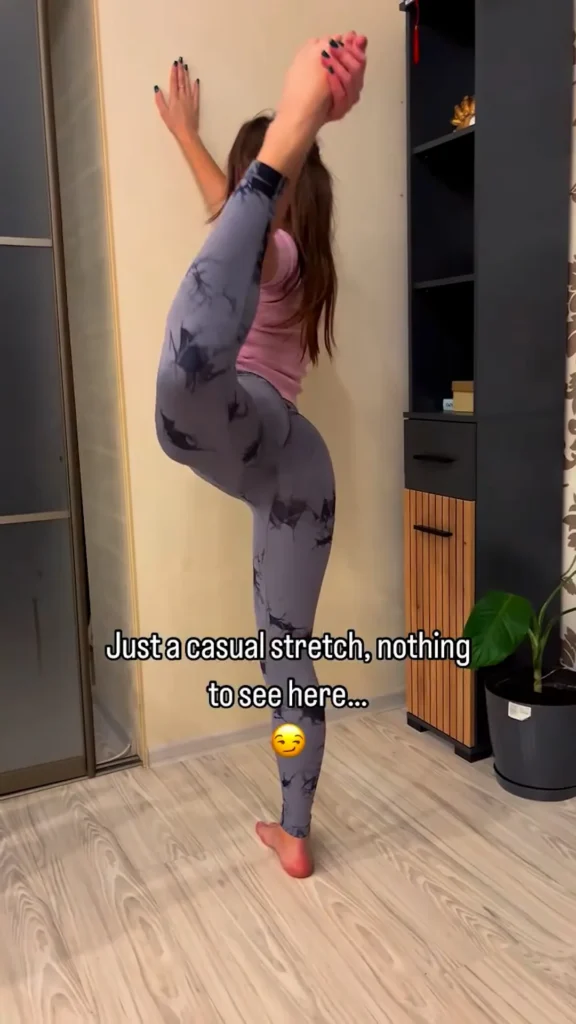
Pose: Wall-Supported Vertical Split / Standing Leg Extension (Trivikramasana / Wall Split Variation)
Key Benefits:
• Advanced Hamstring & Hip Flexor Extension: Deeply elongates the hamstrings and expands hip flexibility against the wall support.
• Standing Balance & Ankle Stability: Strengthens the standing leg, foot, and ankle muscles while holding alignment.
• Core Engagement & Postural Control: Activates the deep core and back muscles to maintain an upright, stable spine.
Follow: